
Episode 7
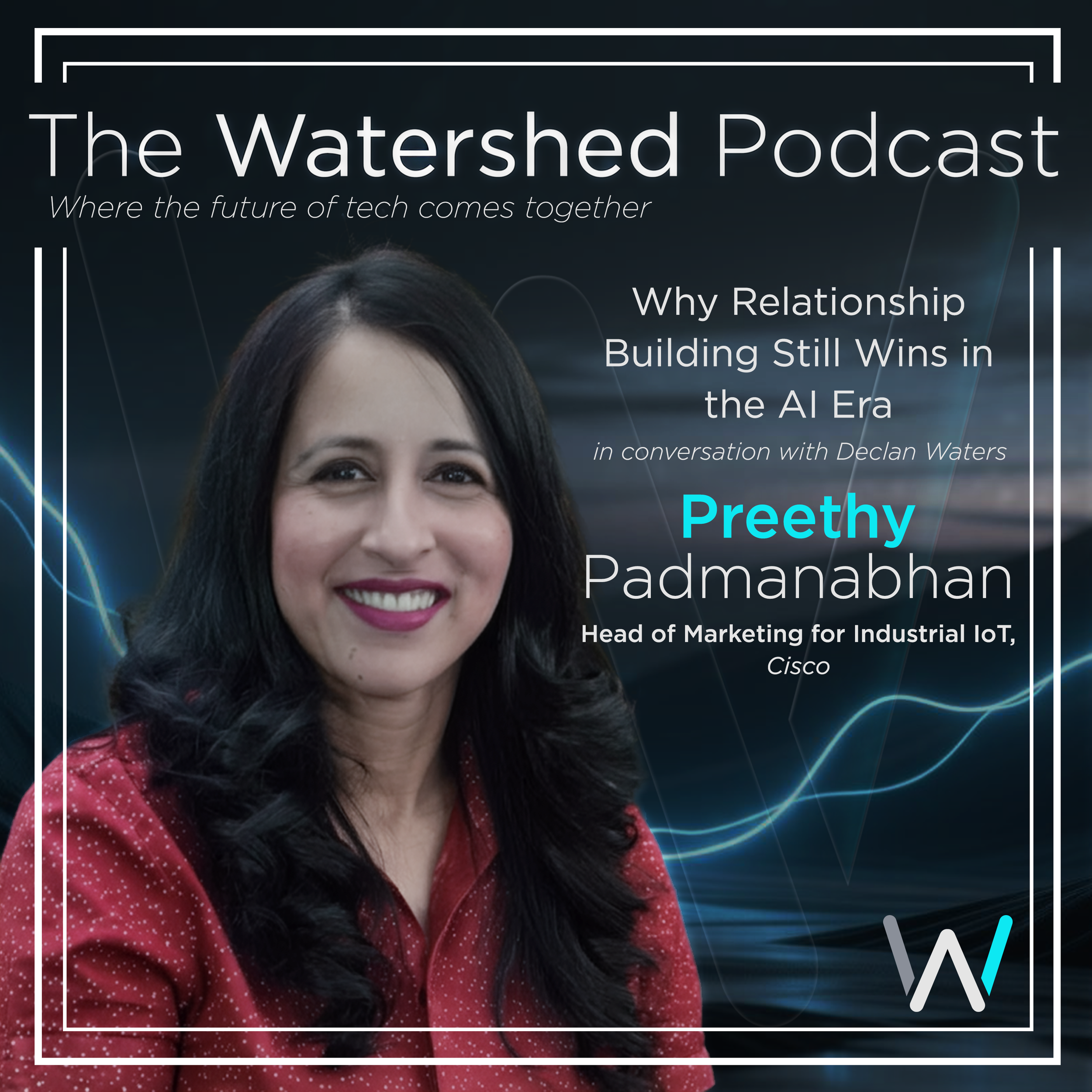
Why Relationship Building Still Wins in the AI Era
Key Takeaways
Career growth often comes from taking on uncomfortable cross-functional challenges.
Relationship building is becoming increasingly important in the AI era.
AI products must focus on solving meaningful business problems rather than promoting features.
Continuous learning and adaptability remain critical leadership skills.
Agentic AI and infrastructure are attracting the majority of AI investment today.
The best career transitions often require persistence and long-term effort.
Community building creates opportunities that extend far beyond traditional job roles.
Human oversight remains essential when working with AI systems.
Preethy’s Watershed Moment
One of Preethy’s defining watershed moments came during her time at Nutanix when she stepped into a chief of staff role and led a major cross-functional initiative focused on driving revenue from the company’s top enterprise customers.
The experience pushed her beyond traditional marketing responsibilities and gave her direct exposure to leadership across engineering, sales, finance, product, and business development teams.
Another major watershed moment came earlier in her career when she transitioned from engineering into product management and marketing roles at Cisco. Rather than accepting rejection, she worked evenings and weekends on projects outside her formal role to gain practical experience and prove herself internally.
That persistence ultimately opened the door to a completely new career path and shaped the leadership approach she carries forward today.
Full Transcript:
Declan Waters (00:01.418)
Hello everybody, I'm Declan Waters and welcome to The Watershed. We call it The Watershed because a watershed moment is all about the things that change for good. And in technology, leadership, and business, we're certainly living through one of those moments right now. On this podcast, I'm fortunate enough to sit down with people who've hit that inflection point in their careers, they're shaping what comes next, and we talk honestly about what's changed and why it mattered.
Today, I am really thrilled to be joined by Preethy Padmanabhan. Preethy and I go back to our Nutanix days, and we have so much to talk about on the podcast today. She started out her career as an engineer, but she certainly didn't stay there. Over the past 20 years, she's moved across engineering, product, marketing, and executive leadership, navigating no less than two IPOs, a private equity exit, and senior roles at companies like Nutanix and Freshworks.
Along the way, she's built something that most people at her level don't get the time for. A community of over 7,000 executives, founders, and investors, and of course, a podcast with over 120 episodes deep, a track record that I would love to follow one day. She's been advising more than 30 startups, and she's now making the move from operator to investor. Preethy, it's wonderful to have you on. How are you?
Preethy Padmanabhan (01:24.918)
I'm well. Thank you, Declan, for having me on your podcast.
Declan Waters (01:31.936)
That is an absolute pleasure. Now, I said in my introduction that you're moving from operator to investor, but we actually have some pretty breaking news that you've just given me before we went live. So why don't you tell everybody what's happening at the moment in terms of your next step in your career?
Preethy Padmanabhan (01:49.836)
Yes, I moved from operator to investor this year, and I've been an angel investor for seven years, so I'll continue to do that. But I am moving back as an operator, and possibly when you telecast this episode, I'll already be at Cisco, back at Cisco as Head of Marketing for the Industrial IoT business unit. It's a billion-dollar business, and so I'm super excited for this new journey, going back to a company that I've admired and loved working for in the past.
Declan Waters (02:24.928)
Well, that is fantastic. Congratulations to you. That sounds like a really awesome job and a big job too. Let's maybe take a little bit of a step back. Obviously, we know each other well through Nutanix, so that was a special journey, wasn't it, for both of us? I've seen a lot of your story from the inside, but maybe you could just give our audience a walkthrough of your career so far.
You've worn a lot of hats. I mentioned engineer, marketer, community builder, investor, and now back into an operator. Maybe you can give us a snapshot of that career, Preethy, just to put everything into perspective.
Preethy Padmanabhan (03:07.916)
Yes. I consider myself as somebody who can turn geek speak into people speak, somebody who was a software engineer but turned into a businessperson with go-to-market, product, and marketing roles over the last 15 years. I've been able to bring what technologies companies are building and move them from just a simple product into an actual successful business line. That's in a nutshell.
In my career, I have held a lot of different roles, managing roles, leadership roles, been on the leadership team of the company, presented to boards as the CMO or VP of Marketing. Recently, I was the CMO of Emergent Ventures, where I was actually in charge of helping grow the brand of the venture fund. That is something I did in the past year, and it was a really interesting outlook into moving from an operating company into a VC company. I can share more on that experience.
I also believe in our ability to influence beyond the seat. It's not just what we do as a company operator or investor, it is what we do for the community. Five years ago, I started the 10X Growth Strategies podcast, and you have been on the podcast yourself to share about one of the books you read, Ego Is the Enemy, which I really enjoyed talking about, Ryan Holiday's book.
Basically, I really think doing something like this as a podcast helps bring value. Also, with the in-person community I've built in San Francisco for founders, it's a way I help connect people with each other.
Declan Waters (05:18.431)
You do get a lot of satisfaction from that, being that connection point, right? That community that you've built. How does that feel? It must be a real sense of achievement bringing all these people together.
Preethy Padmanabhan (05:33.486)
Absolutely. In fact, just a couple of days back, we hosted our event for April during San Francisco Climate Week. It was at a beautiful venue overlooking the entire San Francisco skyline on the 32nd floor. The venue could host 125 to 150 people maximum, and we had 650 signups.
We had to really make sure people could either join online on Zoom or that we could accommodate people in the venue. We had amazing panels with VCs across Coast Lab Ventures and a few other VC funds from the climate area, and some execs from Google working on climate. So we had a really good event and a packed audience.
Declan Waters (06:27.241)
So impressive, Preethy, it really is. I think about the people that we talk to on the podcast, and I can't think of anybody who has this diversity in their background that you do.
My first question based on that is, what keeps you curious after 20-plus years in the industry? You've been doing this a long time. What keeps you excited going into the next five, 10, or 15 years?
Preethy Padmanabhan (07:03.541)
One thing about me, Declan, is that I get bored easily, and I think that is a blessing because I know I can learn something very quickly. Then within a couple of years, I'm looking at what is the next big thing I can learn.
So the learning mindset or growth mindset is what has really helped me pivot through all these different roles. What I look forward to is the opportunity to actually go and learn in this new market, in this new technology, and in this new challenge. Now we have to grow a business into a multi-billion-dollar business, and that's something I would really enjoy discovering and working with new teams to build.
Declan Waters (07:54.240)
I think you're going to have a very unique perspective on what the next big thing is and what we can look forward to, because you're talking to all of these founders in your role as an investor and through your community. You're harnessing them to see what's coming around the corner.
Before we get into that, I want to ask something I ask all of our guests, which is their Watershed moment. This is a decision in your career or something that fundamentally took you in a different direction, and you look back on it and think, wow, that was a really important moment for me. It could be more than one. What springs to mind for you, Preethy?
Preethy Padmanabhan (08:45.791)
I can talk about a couple. I'll talk about the one at Nutanix because we both worked there together.
I was actually in marketing for maybe seven or eight years by that time, and I was running healthcare marketing for Nutanix, which was a huge business. We had grown it from $30 million to, at that time, a $150 million business. We had certainly grown it tremendously in about a two-year timeframe.
I was looking at what the next growth opportunity within the company would be, and I had the opportunity to explore a chief of staff role. First, there was an opportunity to work with Dheeraj himself, as well as the president of the company, Sudheesh Nair at that time.
I did end up taking a chief of staff role with one of the vice presidents in Sudheesh's team, and that was such a positive decision for me. First off, it helped me move from a senior role to a director-level role, which I believe, and I've heard this from others too, is one of the hardest promotions to move toward. Especially in a large company like Nutanix or Cisco, breaking into the director level is a tough move.
I was able to get that because it was something I had been aspiring toward for multiple years.
Secondly, Dheeraj suggested that I work on this huge initiative to bring in revenues from the top 500 customers. I ended up running a cross-functional initiative to bring in at least 50% of revenues for that year from those 500 customers because we had more than 5,000 customers at that time.
That top 10% bringing in half the revenue was a huge tall order. Taking that role and making that happen in a very systematic way was a big watershed moment for me. I actually learned a lot. It was one of the best experiences in my career.
It was very tough to bring people together across engineering, product, marketing, sales, finance, and business development. Literally, the whole company had to come together, with so many leaders from across the organization to make it work.
Declan Waters (11:27.519)
So you're not afraid of those big challenges, are you? Because that was a big one, wasn't it? You took it with both hands.
Preethy Padmanabhan (11:37.705)
It was a big one, and I think I didn't know going in how big it was going to be, which is good.
Declan Waters (11:44.116)
Yes, sometimes that works out for the best, doesn't it? If you don't quite know, but you go for it anyway.
That sounds like a really pivotal moment for you. Thank you for sharing that, Preethy. Was there anything else you wanted to share in terms of watershed moments?
Preethy Padmanabhan (12:05.323)
The other one is the pivot I made from engineering to product management and product marketing roles at Cisco.
I think many engineers, and even people looking at career transitions into business roles from other areas, face a really tough transition journey. I had a really tough transition journey over two years. This was back in the 2008 to 2010 timeframe, and it was also during a downturn.
The Watershed moment I want to share is that I did not take no for an answer when I was looking to move. I was about eight years into my career and thought, okay, let me start working with some of these product management and product marketing teams part-time after hours, during evenings and weekends.
I ended up doing a competitive analysis for one team, another requirements analysis for another team, and I started working on a customer acquisition project for a third team. So I did three or four different projects for different teams.
In parallel, I was also interviewing for roles, but the best way I got the new role was through recommendation. The person I worked with for the competitive analysis referred me to a director who was hiring for four or five positions and said, “You have to hire Preethy. She can help you with all your outbound, go-to-market product and marketing work.”
It was a new business unit, which was perfect because I could really build it from scratch and learn as I went over the next couple of years.
That's what happened. I did not take no for an answer. I really went and did what I could in my capacity to establish and prove myself because ultimately it's a catch-22. You need experience to get into a role, but you need the role to get experience. I was getting the experience while doing my day job in small parts, and that helped me make the transition.
Declan Waters (14:39.081)
It's such a good example of not taking no for an answer. I know you, and I can just see you being like that.
It paid off, didn't it? These days, there's a lot of instant gratification thinking. People want things immediately, but you said two years. Two years of doing the extra work and putting the hours in. It clearly didn't come easy.
Preethy Padmanabhan (15:13.070)
Absolutely. That's something I've recognized multiple times in my career.
Sometimes some of the best roles come when you actually put in the hard work. I've even heard some founders of billion-dollar unicorn companies say they were turned down from regular job offers, but they didn't take no for an answer and ended up building something fantastic.
That's something I've taken to heart. Just because one door is closed does not mean there are five other doors waiting to be opened.
Declan Waters (15:54.410)
You certainly know how to open doors because you've had this incredible career arc from engineer to CMO.
At Freshworks, you had a very busy role running marketing, and then during that time, you launched the podcast. You've got all this going on, and then suddenly it's, “Right, let's launch a podcast in my spare time.”
Tell us about the inspiration for the podcast. There are a ton of podcasts out there now, and you're over 120 episodes in, which is super impressive. Tell us about the origin of the podcast.
Preethy Padmanabhan (16:53.260)
Absolutely. We are at about 120 episodes now, and we'll get to 200 soon.
When I launched the podcast, the whole idea was that we had all been so focused on building our company businesses that people hadn't really focused on building their own brands.
The podcast gave me an opportunity to build my own brand while also helping others build theirs. That's why I launched it, to bring in guests who were also building their brands, along with some stalwart guests. We've both had Nutanix co-founder and former CEO Dheeraj Pandey on our podcasts.
I've had the fortune of featuring many CEOs on my show. It was originally about books, and now we have pivoted toward startup conversations from both a founder and investor perspective.
Especially with the in-person events I do, I take those conversations and post them as podcast episodes. So we've pivoted toward more in-person conversations and making those part of the show.
Declan Waters (18:24.415)
I still listen to the podcast. I see it all the time on my LinkedIn feed, and you get some really high-profile guests coming on.
I have to ask you about books. What are you reading right now? What's on your bedside table?
Preethy Padmanabhan (18:55.896)
Actually, I was relooking at one of my classic books called Crossing the Chasm.
I had a chance to listen to Geoffrey Moore speak at a conference last week, and I was looking back at my notes. I also got another copy of the book because going into my new job, I think it would be valuable to revisit how to grow a business from early adopter to mainstream to growth.
That's one thing I'm looking to relearn and apply to my business.
Declan Waters (19:30.387)
That's awesome.
We can't be on a podcast these days without talking about AI, so I suppose we should probably pivot and talk about this technology that seems to be doing quite well at the moment.
You've been at the head table seeing how a lot of these companies are growing. In your mind, what does an actual AI launch look like when it's done well versus one that isn't delivering what it says it does? What are you seeing in terms of trends for launching an AI company these days?
Preethy Padmanabhan (20:22.912)
I think every company has now become an AI company.
The fact is that we have had to move toward figuring out how to differentiate. Number one is making sure it's not AI washing, making sure it's actually true, genuine AI.
Number two is making sure AI companies are talking about actual value and benefits rather than just features. Most technical founders and builders tend to really love what they are creating, and they talk about features rather than figuring out the pain point and how the solution adds value and benefits.
I can give you an example from what I did at Freshworks because I ran the AI marketing there for four years.
What we did was classify the entire AI feature base of about 45 features into three buckets. We made it Actions, Insights, and Conversations. This was the first version of the AI messaging.
That made it very clear. The AI at Freshworks was called Freddy at the time. Freddy AI Actions automated repetitive tasks in the background. Freddy AI Insights provided guidance for leaders on trends in their business, such as revenue trends or help desk performance metrics. Then Freddy AI Conversations focused on how people communicate with AI and use AI to respond to customer support questions.
Instead of talking individually about every feature, we grouped them into three simple buckets so customers could easily understand them.
That became very valuable. Our board loved it, and we used that messaging for about two years. This was even pre-ChatGPT, so we were talking about AI before it became mainstream.
Declan Waters (23:11.145)
That's fascinating. Thank you for sharing that.
How do you feel about young people now entering business in a very different working environment than when we started? What advice would you give to young people now, and what do you think are the key skills needed in this AI era?
Preethy Padmanabhan (23:37.633)
Believe it or not, Declan, while learning about AI tools and investing time to continuously learn is important, the most important thing in this AI world is actually relationship building.
The truth is that people are now using AI to write resumes, and AI is reviewing resumes. Companies are even getting sued because AI rejects candidates before they're even given a chance.
The truth is, it's through relationships that young adults are going to get their next opportunity.
When I was early out of college, you could apply for jobs online and get calls back through sites like Monster.com. Nowadays, it's all through relationships.
That's what I would suggest for young adults. Spend the time meeting people at in-person events and reaching out to build connections inside companies. That has become a huge factor in achieving success.
Declan Waters (25:05.919)
That's fantastic.
You're doing speaking events and spending time with companies like OpenAI, Anthropic, PwC, and many others. Is there a common thread you hear from these leaders about where we're headed?
Preethy Padmanabhan (25:41.206)
If I were to synthesize the messages from these conversations over the last two years, one thing is very clear: at least 75% of VC investment over the last year has gone into AI.
The two main areas getting investment are agentic AI and infrastructure. One is the agents supporting businesses, and the other is the infrastructure without which AI cannot run.
The second thing is that while people are afraid of losing jobs, there is also a positive thread in these conversations.
AI can be used to build new companies very efficiently and very fast. Some startups featured on my panels have used AI to grow to multimillion-dollar revenues within one or two years.
We saw a similar shift during the rise of computers in the 1980s and 1990s, when manual jobs were replaced, but it also created opportunities for entirely new businesses and industries.
I see the same positive thinking now. There will be more opportunities for people who are adapting and ready to jump onto this bandwagon.
The third thing is that you have to use AI regularly. I use AI every day. I also try to pick up one new tool every month so I can continuously learn.
At the same time, you need to verify things because AI still makes mistakes. You can't blindly use AI-generated content. There needs to be a human in the loop.
Declan Waters (29:25.575)
I think a lot of people are realizing that now, Preethy. You really do need that human in the loop.
I just wanted to wrap things up by bringing it back around to Cisco. This podcast will probably go out a day or two after you start your exciting new role.
Why don't you give us a sense of the role and how excited you are about this next challenge?
Preethy Padmanabhan (30:02.284)
Yes, I am really excited for this new chapter of my career.
I'm going to be running the marketing team focused on Industrial IoT. Interestingly, I used to work across collaboration, telepresence, telephony, security, networking, and wireless at Cisco.
All of those technologies are going to come together in this Industrial IoT business, so I get the opportunity to bring together everything I worked on during my previous 12 years at Cisco.
That is very exciting for me because I'm a systems thinker. I think in end-to-end systems.
I'll be leading a global team with members across Europe, Latin America, the US, and potentially Asia. It will be an interesting challenge bringing this large global team together to make it all work.
Declan Waters (31:28.383)
That sounds fantastic, Preethy. It's another big opportunity in your career and another challenge that I have no doubt you will rise to.
You're continuing to bring people together at Cisco, and you're continuing to bring people together in your community. I'm just so pleased to call you a friend.
Thank you so much for coming on The Watershed.
And for everybody listening, please check out the 10X Growth Strategies podcast. It's a fantastic listen with so many wonderful guests that Preethy has on the show. Of course, you can also follow her on LinkedIn where she's heavily involved in the AI conversation, and you'll soon see her doing amazing things at Cisco as well.
Preethy, thank you so much. I know it's been a very busy time for you as you pivot into this new opportunity, but thank you for spending time with us today.
Preethy Padmanabhan (32:34.560)
It was a pleasure to be here. Thank you, Declan, for having me on your podcast.
Declan Waters (32:39.519)
Thank you, Preethy.