
Episode 15
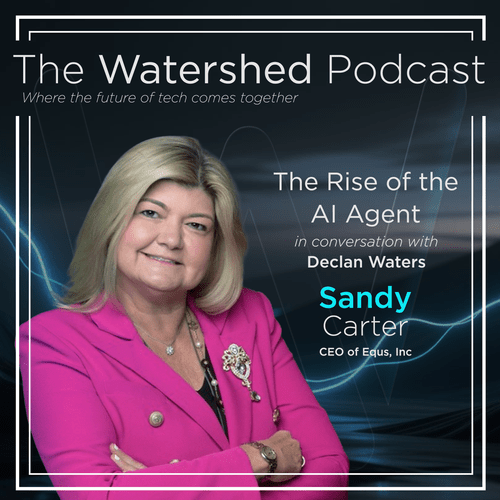
The Rise of the AI Agent
Key Takeaways
AI is evolving from tools that respond to users towards agents capable of taking actions and completing tasks on their behalf.
Agentic AI could significantly change how individuals and organizations interact with technology.
Digital identity and trust become increasingly important as AI agents gain greater autonomy and begin acting on behalf of people and businesses.
AI, Web3 and other emerging technologies should not necessarily be viewed in isolation, with important connections developing between them.
Businesses need to consider governance and control alongside the opportunities created by increasingly autonomous AI systems.
The rise of AI agents could reshape existing roles by changing which tasks people perform themselves and which can be delegated to technology.
Curiosity and continuous learning remain important as the pace of technological change accelerates.
Leaders do not need to have every answer immediately, but they do need to engage with emerging technologies and understand how they could affect their organizations.
Sandy’s Watershed Moment
Sandy’s watershed moment reflects a career built around recognizing major technology shifts early and being willing to move towards them.
Throughout her career, she has repeatedly found herself at the forefront of emerging areas of technology, from cloud and artificial intelligence to Web3 and, more recently, agentic AI. Rather than viewing these technologies simply as individual trends, Sandy’s journey has been shaped by looking for the broader changes they could create and acting on those opportunities.
That willingness to embrace change has also meant continuing to learn and being prepared to move into areas where the answers are not yet obvious.
For Sandy, navigating major technology shifts is ultimately about curiosity, recognizing where meaningful change is taking place and having the confidence to explore what comes next.
Full Transcript:
Declan Waters (00:01.262)
Hello everybody and welcome to The Watershed. Today, I'm joined by someone who's been building AI businesses since long before most people were talking about it. Sandy Carter is with us today and she's led at the highest levels of IBM, AWS and Unstoppable Domains. Five C-suite seats across marketing, sales, product, operations and business development. She's a Forbes contributor, a LinkedIn Top Voice and the author of AI First, Human Always. She's keynoted in more than 90 countries from Davos to the United Nations. And she's now back in the CEO role, leading Equs through this next chapter. Sandy, it is great to have you on the podcast. Thank you so much for joining us.
Sandy Carter (00:46.779)
Thank you for having me on here too. It's really an honor to be on your show.
Declan Waters (00:51.458)
Thank you so much. Well, before we get into it, I wanted to start somewhere perhaps a little bit unexpected. Just recently in London, I met with Tim Peake, who is a British astronaut. You may well know the name. He spent 186 days in space. And he was in London recently for a client conference. He did a fantastic keynote, which I really enjoyed. And then coincidentally, our CFO, Holly, knows two of the Artemis crew that have just got back. He went to college.
She went to college with them. I know, it was really cool. So it made me think about something you wrote recently about when you were like seven years old and you seemed really certain that space was in your future. So the first question is, what was it about space that captured you back in those days?
Sandy Carter (01:23.531)
That is cool.
Sandy Carter (01:41.974)
Well, you know, it was really fascinating because my dad loves space. And so I think I was seven when I got my first telescope. And my dad and I would go and we'd lay out on the grass at night and we'd use a telescope and we'd look up at all the planets and everything. And he would be he would say to me, It would be cool if you could go to one of those planets one day. Like you're an adventurer. Maybe you could do it. I think that's when I started to really think about it.
And it was from my dad, who made me think I could do anything, which is what dads do with daughters, right? Make them believe that they can do whatever they want to do. And so that was my first, I would say, inspiration for space. And then I just started following it. My dad sent me to space camp, believe it or not. So I was like all in. I was all, I was all in.
Declan Waters (02:32.066)
That's it. Yeah, that says a lot about you that you were all in at that young age, right? And what a lovely experience to remember about your dad. And it's funny, isn't it? When you look back on your childhood, it's not the things that you got at that age, it's those experiences, isn't it? Those conversations.
Sandy Carter (02:39.241)
Mm- Yep.
Sandy Carter (02:52.143)
It really is. And I have to say I was blessed with a set of great parents and grandparents who really were encouragers and, you know, encouraged me to read, to learn, to love learning, and to be an adventurer. I mean, that's really some of the things I took away.
Declan Waters (03:11.342)
That's so lovely. So you're seven years old, you're really curious and you want to explore. Is that still what's driving you now? Is that seven-year-old still inside Sandy?
Sandy Carter (03:21.821)
Yeah, I mean, I think what I learned when I was a kid has stayed with me, like that desire, that need for curiosity. It's one of the reasons I fit so well with Amazon. Amazon has a leadership principle, and their leadership principles are lived. They're not talked about, they're actually lived. And one of them is, you know, learn and be curious. And I think, you know, if you've ever been in a meeting with me, I'm gonna ask you 20,000 questions.
I'm not asking you those questions to have you know slip up or if to see if you know. I really am curious, like I want to know like how does this work? How does the code work? You know, how does that business model work? What does that customer really think? So I'm really asking out of curiosity not out of, you know, a desire to trip you up, but really to learn.
And I've been like that, I think, since my grandparents, I would go to my grandparents' house a lot and they would just have me read and then they would we would talk about it and we'd ask questions and they'd be like, what wasn't in the book that you wish was in the book? And it just got me thinking a little bit differently.
Declan Waters (04:33.582)
No.
Isn't that important? You've taken that into your professional life. I, you know, this is, it's wonderful to talk to you. It's the first time we have spoken and just looking at your LinkedIn feed and the way that you, I've seen your keynotes and it does feel like the curiosity is kind of a thread through your, through your career. I sense that from, what I've been reading about you. And so it kind of leads me on to the next question I had around the watershed moment that I asked all of our guests.
I've been really looking forward asking this of you, Sandy because you've had such an incredible career but maybe you could take us back to some of those moments or moments that have been really important for you so far.
Sandy Carter (05:19.723)
Let's see. I think there were a couple. I think one was at Amazon, and our CTO led this meeting at Amazon, and I hadn't been at Amazon that long. I was one of the first outside VPs, which was really interesting culturally, given how big Amazon was. And one of the things he asked me to do was to come and share.
A mistake I had made, me and my team had made. And I was like, you know, I really don't want to do that. I'd really like to present about this great thing we did. And he's like, no, you're not gonna do that. You're gonna present on this thing you failed at. And it was really interesting to me because in my career, I had never been asked to present a failure.
Declan Waters (06:13.806)
Mm-
Sandy Carter (06:13.885)
And to do it in 30 minutes nonetheless. Not just say, I failed. Let's move on, right? But like 30-minute presentation on it. And so
Declan Waters (06:16.258)
Yes.
Sandy Carter (06:24.595)
I pushed back multiple times. He said, Look, you're doing it. You can't ask me as much as you want, but you're doing this. And so me as a brand new VP went in and explained something that we had done wrong. Of course, we explained how we discovered it, how we fixed it. And it's quite interesting because when I left Amazon five years later, they had this party for me and they had the executives go around the room and they were saying one thing that they really remembered me about me, you know, a couple things that they would always take away from me. And it was fascinating because, you know, they would say, you know, you did this and that was wow. You had these patents, that was wow. But almost all of them said, I still remember that presentation you did on your failure.
And that helped me not to fail in the same way. That helped my team to get in front of that. And so I thought that was such a great lesson from Amazon that says you shouldn't just talk about your successes. You should also share your failures so that people know how to avoid them. And also, you know, people said it makes you look more human, right? More human.
Declan Waters (07:35.598)
Thank
Sandy Carter (07:37.878)
The other, I think, big watershed moment for me was when I was at IBM. And when I was at IBM, we, you know, IBM's so big, we like never got beat. And at this time, this small competitor was coming up and was really, you know, beating us in a particular area. And so, you know, I brainstormed with my team and we came up with this new product.
And essentially not just a new product, a new category. And so I was able to create this whole new category that enabled us to leapfrog. And that was the first time I had done any category building. And it taught me a lot. I won awards about creation of a new category. At that time, you know, now we all talk about categories and we talk about building categories. But at that time, you really didn't talk about it a lot in tech. You talked about it in, you know, consultation.
consumer packaged goods. So that was a real watershed moment for me, That was driven out of a necessity. We needed to figure out how we didn't lose our customers, our best customers to this little startup was, you know, kind of going into a new category and disrupting them that way. And that was a that was written about a lot because IBM, this big gigantic elephant had disrupted.
So that was kind of cool. And then I'll just tell you one more, and this is personal. before my grandmother passed away, she left me this necklace, and I don't have it on today. I usually wear it every day. It's being cleaned right now, but it's a stone, and there are bunches of stones around that big stone.
And she left it to me and she said, I always want you to remember that you're that stone in the center. You're shiny and you're glittery and I love that about you. But never forget that you shine more because of everyone who's around you. And I'm gonna cry. And one of those people is me, I'll always be cheering for you. Your family, your colleagues, just know you don't do anything.
Declan Waters (09:39.647)
yeah. That's beautiful.
Sandy Carter (09:49.6)
By yourself. And so I love that because it has always reminded me that you're not doing things by yourself. You may feel like it, but you're not. It also helps me to be humble enough to ask for help, which I typically don't naturally do to ask others for help, so that we can shine more brightly when we get that help. And so I always take that lesson away.
Declan Waters (10:14.872)
That's a beautiful story, Sandy. Thank you for sharing that. Isn't it nice that you can carry that with you, know, personally and also through your career as you go forward?
Sandy Carter (10:24.999)
Yeah, I will tell you that
Yeah, I mean my family has been such an important part of who I am. I don't know, like even my husband today, like I couldn't do what I do today without my husband supporting me my kids, without my kids supporting me now, without my grandmother raising me the way she did, without my parents. And so I always, when I mentor the next generation, I always talk about that tribe that you have around you. And you know, some people don't have it naturally, like I had naturally my family.
But if you don't have it naturally, you can build it. You know, I've moved away from my family and have to build my tribe where I was. It's harder, but it's doable for sure. But just don't don't ever forget to build that tribe with you.
Declan Waters (11:15.148)
Really good advice, isn't it? Yeah. And when did that really become sort of a reality for you, that building that tribe is so important?
Sandy Carter (11:25.239)
You know, I think it was actually when I lost my grandmother because I was living in Austin. My grandmother, which we just talked about how much we love Austin. I was living in Austin. I had just moved there and my grandmother lived in North Carolina. And it sounds weird, but she and I would talk twice a day. She was a night owl. So she'd call me at like eleven thirty at night, and anyway, it was a big loss in my
Declan Waters (11:34.455)
Thank you.
Sandy Carter (11:55.668)
My ecosystem when she passed away. And so I think that was probably the first time I was early in my career and I lost one of my anchors. And I was like, my grandmother always told me I need to build it. So I built an amazing ecosystem in Austin. You know, I've moved away from there now and a lot of my friends have moved away, but I think that ecosystem has been super strong for me. That tribe, that Austin tribe, even though they're now in, you know, DC and Arizona and all over the place, I still go back to that the strength of that tribe.
Declan Waters (12:29.955)
Yeah.
Declan Waters (12:33.71)
That's lovely. You know, it's interesting and it's really good to hear you talking about...
Failures, someone at your stage of your career, I think it's so important for young people to hear that because I know from my own experience that you learn so much more, don't you, from those failures. At the time, perhaps, it doesn't feel like it, but when you look back, you think if I hadn't gone through that, if I hadn't had those struggles, you wouldn't be probably where you are today. It's so important, isn't it, to embrace that. It's not happening at you, it's happening for you in many respects for that.
Sandy Carter (13:07.795)
Mm- Well, and you think about it, like on LinkedIn, let me see how to say this. How many stories do you see on LinkedIn about I failed here? Let me tell you about that. I mean, usually they're like, whoo, look at me. Like it might be indirectly, but that's what they that's what they are. I've tried to do that on LinkedIn too, like tried to share little stories about.
You know, something that's happened that hasn't been an overall success. And I have to tell you, they don't typically do as well on LinkedIn. But I get more people pinging me on the side.
Declan Waters (13:44.131)
Yeah.
Sandy Carter (13:48.946)
Not publicly but on the side going, I had that happen to me once, or you know, that's something that I can relate to because of this. So it seems like those touch deeper, but it's not, I don't think it's what most people are looking for today. But in real—go ahead.
Declan Waters (13:59.151)
Yeah.
Declan Waters (14:06.446)
I agree, Sandy. I think it takes a lot of confidence to do that as well, because it takes a little bit of vulnerability, doesn't it, to talk about that on a platform like LinkedIn. But I think it speaks a lot for your character that you do that. And I wish more people would, to be honest.
Sandy Carter (14:27.963)
Yeah, I do too. I think that, you know, I mean, I see all these comics now on LinkedIn, like, you know, if I was just talking to someone, I would say, you know, I got this thing. And then if you're on LinkedIn, you say, I was selected out of thousands and thousands of people, and you blow it up, right? And someone said yesterday, you know, LinkedIn is no longer, they're afraid. LinkedIn is no longer a place of authenticity, but it's a place to celebrate or brag or that sort of thing.
So I do think we should get back to kind of the commonness of being open and vulnerable to share those things. It's one of the reasons why, you know, you and I started talking right before this. I'm a new CEO and I am now looking for like a CEO group.
I just found one that's here, but I'm looking for a CEO group so that I can be vulnerable and I can share what I'm going through and where I need help. Because I just find that to be so much more helpful than just reading about all these CEOs online who are celebrating their series A or they did this or whatever. I want to hear about the goop behind that is what I want to hear, and I want to learn from that. That's what I'm looking for.
Declan Waters (15:44.463)
It goes back to your learning mindset, doesn't it, Sandy? And it's so great to hear that from you because of your career and everything you've achieved. You still want to learn. You still want to improve. That mindset is so important and so refreshing to hear that coming from someone like yourself. And talking about pushing boundaries and doing different things, you've also written a book. I don't know how you found the time to do all of this with everything that you've got going on, but you've a new book called AI First, Human Always. tell us a little bit about the book Sandy, what was the motivation behind that?
Sandy Carter (16:22.366)
Yeah.
So here's my here's my book. I have it here with me. there's a couple things about the book that I that I really love.
My first motivation was to share what I had learned. I have been doing AI since Watson at IBM, which is 2013. And I know like I teach at Carnegie Mellon. And when I say that, some student evidently always raises their hand says, ChatGPT wasn't here then. How were you working on AI? And I'm like, well, AI existed a little bit before ChatGPT. And so I just wanted to share what I had learned and to share it in human language.
Declan Waters (16:56.472)
happy.
Sandy Carter (17:02.957)
The other thing I love about the book is the title is AI First, Human Always. And I fought really hard to keep this human always in the title of the book. When I wrote the book, everybody was all about AI. I mean, now it's kind of starting to change a little where people are now starting to realize humans really play such an important role. But it was so important for me to write about the role of humans and why I think that humans will always continue to play a mega role.
Declan Waters (17:32.974)
Let's expand a little bit on that Sandy. So what's your thinking there in terms of, because obviously there's a lot of positivity about what's happening, a lot of negativity in equal measure. So what's your take on this from the research you've done from the book and the experience you've had so far?
Sandy Carter (17:33.685)
And then the third Yeah.
Sandy Carter (17:52.246)
So if you look today at where most companies are successful, most companies are successful when they actually start with the humans. In fact, 77% of executives today say their big problem is not AI tools, it's about getting their people to use AI tools.
77%. I mean, I think that blows my mind. And if you look at you know, if you look at how most companies start with AI today, what they do is they start with the technology, right? We're always enthralled with the new sparkly technology. And then they look at their processes, and then they kind of look at the humans. But the most successful companies start with the people, look at what they're doing, look at where they need help.
And then they go to the process and then they select the technology. You know, IKEA is a great example of this, right? They found IKEA ha went to their people. They found some areas that they could improve. They used AI for that. But rather than replace the people who helped them through that, they said, okay, now where is our gap? Like we now have all these people. Where is our gap? And they put those people in that gap.
Declan Waters (19:02.382)
interested.
Sandy Carter (19:02.655)
To where the humans, the morale went up, the whole company's value went up because of the way they approached it. And I think we're gonna see more and more and more companies approach in that manner if they're gonna be successful. I think that this is really super important. And so, yeah, and I do think there are things that humans do really well, especially today, that a computer just can't do, you know. I was practicing my presentation.
I was trying out a new AI tool, and so I'm gonna go present here in September. And the tool asked me to send my presentation in to start with. And so I did that, and the tool came back and said, “You've got a lot of dead space. Like you've got this picture. There's no words on it. Take that out. You've got this here. I don't understand what that means. Just take that out.” And so essentially, as I present, I'm a storyteller. I tell a story. And what AI asked me to do is remove all the stories and just give the facts.
Declan Waters (20:06.904)
Yeah.
Sandy Carter (20:09.323)
Well, that's not the way people respond, right? When you present, they want it to be related to them. They want you to tell a story. one of my favorite quotes is, tell me the facts and I'll believe, but tell me a story and it will live in my heart forever.
Declan Waters (20:24.654)
Yes.
Sandy Carter (20:25.335)
And you know, the thing that I find is after I present, people will come up to me and they'll say, I loved your Stanley Cup story, I love that story about the sumo wrestler, I love that story about your kids, your daughters. And so, but it was fascinating to me that this presentation practice tool that so many people had told me was so good immediately stripped out all that humanness from my presentation. And of course.
Declan Waters (20:52.406)
And it wouldn't have made it as impactful, would it?
Sandy Carter (20:55.653)
No. No. And here's something that was really interesting. I have a podcast too on marketing and AI. And my daughter came on to interview me. And one of the things that she said to me that has stayed with me to this day was Mom, you push back on the system. Like you push back and said, No, I'm gonna tell those stories.
But someone like me, I'm just starting my career. I don't have the confidence. Like if the AI says, take those stories out, myself and my peers are more likely just to take those stories out. How do we gain that confidence? Because we don't have your experience. And I think that is where the humans are going to shine, which is that,
Declan Waters (21:35.822)
Mm-
Sandy Carter (21:41.898)
That judgment, that storytelling, that creativity, that critical thinking. For me, that's where humans will continue to thrive and that'll make a big impact, I think. And then yeah, go ahead. I was just gonna say one last thing about the book and then I won't talk about it again. But one of the things that I realized, I was talking about AI first, and I started thinking, you know, I'm
Declan Waters (21:57.241)
Would you? Sorry. No, go ahead, please.
Sandy Carter (22:11.209)
If you've written a book before, anybody who's written a book before knows that you have to write the book far ahead. It takes the publishing company a long time to produce it. So I was like, my God, AI is moving so fast that by the time the book comes out, it's gonna be old. And so I decided to create an AI agent to go along with my book. So everyone who buys the book gets the AI agent.
Declan Waters (22:26.062)
Yes.
Sandy Carter (22:35.027)
Now There are rules, by the way, because Wiley owns the copyright of the book. So you have to prove that you actually bought the book. You just can't get it to get it. But what the agent does is I train it on my new research. So I publish in Forbes, I publish in The Digital Economist, I publish for the World Economic Forum. And in all those places, I'm updating my research. And so that enables me to refresh and keep everything going. And so I was the first book.
That we can find anywhere that was not just a book but that came with an agent so that the book constantly was refreshed. And I felt like again, you know, I was drinking my own champagne. I wanted to be curious. I tried 17 different agent platforms to get my agent to work. It's not like today where there are so many easy platforms. So anyway, I think that was one of the other really cool things about the book was that I was able to not just
Declan Waters (23:10.51)
Thanks for watching.
Declan Waters (23:14.723)
Yeah.
Declan Waters (23:20.237)
Sandy Carter (23:31.573)
Talk about it, AI first, human always, but to show it in the agent itself.
Declan Waters (23:36.271)
That's so cool. That's the old world and the new world coming together, isn't it? That's such a good example of that. I will be downloading the book for sure, Sandy, and checking out the agent. The other question I had for you about the process, and I'm an avid reader and I will be reading the book, and I'm sorry I get a chance to read it before we spoke, how are you feeling now having written the book and your kind of...
Sandy Carter (23:40.553)
Mm-
Sandy Carter (23:45.163)
Okay, awesome.
Declan Waters (24:05.42)
thinking around the whole world around AI from when you first started out? Have you changed your thinking in some ways having gone through that process?
Sandy Carter (24:15.547)
yeah, I mean, you know, I used to read my daughter's favorite book was Alice in Wonderland. It's an oldie but a goody. And one of my favorite quotes in there is Alice says, I have to run twice as fast just to stay in place. And I feel now I'm running five times as fast just to stay in place. So yes, there have been so many new improvements since I wrote that book, so many changes, and so much more focus on people.
I mean, I think you're seeing almost like a flip, right? People are now really wanting to make sure they are included, wanting to play a role, wanting to make sure they have a say. And I talked about that in the book. I think it's even accelerated since then. And like the tools, like I'm actually redoing my agent now because when I wrote the book and I created that, there really weren't any
Declan Waters (24:43.65)
Mm.
Sandy Carter (25:09.355)
places to easily do it. Like we hadn't had OpenClaw yet. We hadn't had Hermes yet. None of those technologies that make all that so easy. And so now I want to update my agent and make it even cooler and better as well. So there's a lot of technology things, a lot of more human things that have come to be, and I think a lot more tests and research to show what makes a successful project.
Some of them are just what I call basic business, you know. I don't know why we constantly get so enamored with the shiny object and we forget all the basics. So we're almost going back to basics with everything.
Declan Waters (25:51.567)
That's interesting, I love asking people about the AI use cases in their own personal lives. How are you using it now? I'm sure professionally, but personally, are there areas of your life now where AI is really starting to help and you're getting more interested in it? What's happening on that front?
Sandy Carter (26:15.007)
Let's see personally, I don't know if there's really any big aha's, but let's see, I've created a board of directors. I have a board of directors for me as a business professional, but I also created a board of directors for me as a mom, as a daughter, as a wife to give me some advice as well.
Declan Waters (26:35.374)
Right.
Sandy Carter (26:36.701)
So I've got, you know, you always in your personal life you have health issues, you have conflicts that occur somewhere. And so I created an agent that is my board.
I look at people who I really like let's take Brene Brown, right? She's got writings and things, and I love her approach. And so I create a board just like I do for work. So at work I might have, you know, Warren Buffett and Jeff Bezos on my board to provide me advice and looking around the corners or how to approach a business situation. I do the same for my personal life as well.
And then I've also learned about privacy and how important privacy is. So I have a family member who has cancer, and that person sent me all of their records, and he had said, I took out my name, my serial number, my Social Security number, my phone number, and everything, and I uploaded it anonymously. But yet it's now still coming back to me.
Declan Waters (27:15.682)
That's it.
Sandy Carter (27:43.252)
with, you should try MD Anderson, which is a big cancer hospital here in the US. what about insurance and all these questions because he input it? So he was like, How do I take it out? So personally now it's one of the reasons I came to Equus, which is about privacy based AI. It's being able to use the tools but protect your private data. It's not used to train an LLM. It's not shared. It's not used for advertisement. It's only used for you. And so those are some of the things that I'm looking at personally as well. You know, and then the basics, right? Like I use it for planning my vacation. I just wrote a LinkedIn article how I used it to plan my packing.
Declan Waters (28:32.066)
Mm- Yeah.
Sandy Carter (28:32.905)
That article did really well because what I did is I put my clothes on the floor. I took a picture of it and I asked Claude, Hey, can here's my itinerary. Match my clothes to my itinerary, match my shoes to my itinerary. And one of the first things it did, just like my husband, it said, Why are you taking seven pairs of shoes for a five-day trip? Right. And so and but the cool thing is it made me this.
Declan Waters (28:53.034)
Exactly.
Sandy Carter (29:00.917)
picture view, almost like a infographic, but with pictures on it, so that I could go through and see each day what I was wearing and which shoes I was wearing and which shoes I wasn't supposed to take, but I still took. You know, and it helped me with that. So I shared that on LinkedIn and it just took off. I mean, it was it was viral. It was interesting to see. And you know, here's what, here's what I think too.
Declan Waters (29:14.665)
I'm
Declan Waters (29:24.354)
Wow
Sandy Carter (29:30.887)
So I'm essentially living in Silicon Valley and you know we're talking about AI all the time, every day. You and I are talking about AI, but most people aren't. Right? And so when we I mean, if you look at the number of people today who have a paid subscription to one of the LLMs, it's in the world, it's like such a small number.
Declan Waters (29:43.648)
Mm- Mm- That's true.
Sandy Carter (29:56.66)
Like such a small number. And so, you know, I posted that example on LinkedIn. And of course, I had all the, you know, the native AI users going, my God, this is so simple. Don't use a use case like this. And then on the other hand, I had people of all walks of life saying, Wow, I didn't know that AI could do this. Right. And so we have to remember that a lot of times where we are.
Declan Waters (30:17.326)
That's right.
Sandy Carter (30:22.761)
where you are today, because you hear all these stories, and where I am isn't where most people are. And so you do have to think about that too.
Declan Waters (30:30.35)
Very true, very true indeed Sandy. We take that for granted don't we because we're living and breathing every day. And it's those LinkedIn posts that you don't think are going to do well, they're the ones that sometimes take off. So I'll have go back and check that one out. It sounds like a good one. You mentioned Iqris, the new company that you've joined as CEO. So it looks really interesting. Maybe you could paint the picture for us in terms of the big problem that you're solving there.
Sandy Carter (30:36.704)
Yep.
Sandy Carter (31:01.449)
Yeah, I mean, I think it's pretty simple. I think people now are starting to realize that AI is getting ready to act for everyone, right? We're all gonna essentially have agents eventually. I think what we're at right now is who decides who it answers to? Is it gonna answer to you as a person?
Or is it going to be more like you know Google 24.0 and monetize the data and use it to sell back to you? like what version are we gonna pick today? And for me, that's the problem, right? I think that AI should be personal to you. It should stay with you. We should be in control of it from the first minute we use it.
It should be something that we choose to use and feel safe using. We shouldn't have fear in the room when we use it. I just was in a board discussion. I wrote about this yesterday where you know, board members who again aren't all tech savvy had accidentally entered stuff about the board, about what the board was going to discuss into an LLM.
Declan Waters (32:24.206)
Mm.
Sandy Carter (32:24.627)
And one story was one of the boards was being trained. I thought this was funny. One of the boards was being trained on AI and they chose to use ChatGPT. And they were all in, they were all asked to enter in our company is going through a hostile takeover and see what happens, see what advice it gave you and everything. And then guess what happened? There was a rumor that came out within six hours of them all entering this in for a training exercise that their company was undergoing a hostile takeover.
Declan Waters (32:56.193)
My goodness. Wow.
Sandy Carter (32:58.163)
And so like who knew? Who knew that would happen? And so why is that? It's because the data's not private. It's being trained on. Others are taking advantage of what you're putting in. And so I think, I mean, that's why I came to Equus. I'm really passionate about privacy and making sure that what you put in stays with you. It's your data, it's your memory, it's your reputation.
Declan Waters (33:05.39)
All
Sandy Carter (33:25.533)
It's not someone else's. And so we have a business to consumer offering, you know, for consumers to do that. Because I think it's important that all of us have this capability, not just big business, but each of us have that capability to protect our data, right? Whether you're a mom in Iowa or you're, you know, a dad who's sitting there in the UK in Windsor, you should have that.
Declan Waters (33:27.341)
Sandy Carter (33:53.802)
That safety net, if you want to put in about your child's football matches and you wanna plot them all out so you can go to them in between your work schedule, you should be able to do that without risking other people knowing where your son's going to be, that sort of thing.
Declan Waters (34:07.822)
Yeah. So it's that trust, that trust layer is going to be so important, isn't it, going forward.
Sandy Carter (34:13.799)
I think so. I think, I mean, in my mind, it is the next frontier. Trust will be the competitive differentiator.
Declan Waters (34:21.87)
And that's what you're all about as a company. That's really the center of it.
Sandy Carter (34:24.073)
That's right. Yeah. For consumers, we're doing it for businesses as well, but our main focus right now is for consumers. Yep.
Declan Waters (34:32.558)
Well, congratulations on the role. It sounds very exciting. Are you happy?
Sandy Carter (34:35.817)
Thank you. I am really excited about the team is amazing. yeah, I'm super excited. And the founder, you know, one of the things I love is that some people talk about things and some people do things and some people live things. And he lives this. Like he is very passionate. It's not just like a fly-by-night. He is very passionate about what privacy means to the individual.
Declan Waters (35:04.942)
That's good. You need someone like that, don't you? As someone in company at that level. Because it flows through the organization. It's so important to have that.
Sandy Carter (35:07.273)
Mm- Yep.
Sandy Carter (35:13.513)
Yeah, that's a great way to say it. It flows through the organization. It flows through our customers. You understand that this just isn't a way to make money because we could make a lot more money selling data. This is something that is fundamentally a right for people to own their own data.
Declan Waters (35:31.126)
Yeah. Well, we've, we've covered a lot of ground in a short period of time, Sandy. And before we, came onto the show, were talking about the fact we've, we've both got daughters, relatively similar ages. And I love the fact that you take your daughters out into the field with you. You go to conferences, they listen to your keynotes. They see what Mom does for a living.
How important is that to you? I know family is incredibly important and we've talked about that. How rewarding has that experience been taking your daughters out to work with you?
Sandy Carter (36:09.589)
My gosh. Well, first of all, I think about the value to them because they got to experience different cultures with me. We went to Paris, we've gone to London. And I think it's just great that they get out to see and experience.
how different people think and live and work. I think that has been amazing. I think for me, it's taught me a lot about actually about how I do my presentations, you know, because my daughters give me unfiltered truth. They're like Mom, you talk too long.
Like I was really interested until point blah, right? Don't do, don't do what, don't try to do everything. I'm like, okay. I mean, it's and it's true, right? It's really good feedback. once I got feedback on my outfit, they're like, Mom, you're like hip and you're cool, but you don't dress it like in your in your personal you do, but in work, you need to change it up a little bit. So anyway, they're just brutally honest. And I love that. And then just having them there, like I miss that.
Declan Waters (36:51.534)
Yeah.
Declan Waters (37:08.526)
Yeah.
Sandy Carter (37:13.003)
them so much when I travel. So having them with me or having my family with me really makes a difference, I think, too, in my mental outlook and my mindset as I go through the day.
Declan Waters (37:25.186)
Yeah. And what have your daughters taught you then, being on the road with you? What have they taught you about yourself and how you approach work and other areas? I learn a lot from my daughters, I have to say, as I'm going through life with them, which I love personally. But what about yourself, Sandy? What have you learned from your
Sandy Carter (37:51.188)
Yeah, I mean I would say, and I'm curious if your daughters said the same. So when I go on the road, like I try to maximize every minute on the road. So I'll like start in the morning and have breakfast with my employees, and then I'll go to a conference, and then I'll go do customer meetings, and then I'll end the day with a business dinner. And I when I travel, I always invite my daughters to join me. And one night we got back to the house and the apartment.
hotel, I guess I would say. And my daughter said, do you really need to like you're doing this like seven days in a row and you're a hundred percent on the on the move and you're on, like you're on. doesn't that get tiring? Like shouldn't you like just take one night and not do the dinner or one morning and not do the breakfast?
Or, you know, you've never been to Bulgaria. Shouldn't you take like one afternoon and go look at the sites in Bulgaria? So it has taught me like, okay, from a business perspective, people are cheering me on. My gosh, you're so busy, that's so good. And my daughters challenge me the other way. Should I be that busy? Like, should I really be maximizing that time?
Declan Waters (39:02.96)
Yeah.
Sandy Carter (39:12.019)
Because when you do, then you don't get time to think and be curious as much. So that has helped me a lot. Especially when I go on a week-long business trip now. I try not to plan a dinner every night and a breakfast every morning so that I do have time to think and enjoy where I am. How about you? Did
Declan Waters (39:14.894)
Thank you.
Declan Waters (39:27.266)
Lovely, Yeah, similar lines actually is I do try to fit a lot into my day when I'm on the road. I just feel like I have to, right? And I think I've, my daughters have really encouraged me to kind of slow down a little bit and smell the roses as well, like you. Like just, let's go out and do something different. I went to New York recently with my daughter and...
You know, she took me to all these different places. We went to the Brooklyn Bridge, you know, for sunrise. We did photos, you something I would never do, right? If I was in New York on my own. And I had a really big pitch, actually, while I was at the, on the trip with her. And, you know, normally I would be in my hotel room, cramming, getting as much information as I could, trying to prepare for the new business pitch. And on this trip, I didn't get as much time because were out having so much fun and I think I performed really well on the pitch I was really pleased with it and we won the business and I think it was because I wasn't kind of at my desk all the time like preparing for it I was out and about giving myself a bit of a break from everything and so it really worked and so just one recent example of it.
Sandy Carter (40:45.725)
Yeah, and I think that also, you know, I think it also makes you human because I'm also sure that when you went into the pitch to the customer, potential customer, you said, yesterday I saw the Brooklyn Bridge or went to this diner or you know, and so it also makes you in my mind
Declan Waters (40:53.614)
Yeah.
Declan Waters (41:10.967)
Yeah.
Sandy Carter (41:11.773)
It makes you more, it makes for me, it makes you more human. And that's like the book, right? AI First, human always. We're humans. And I think that sometimes we think that we have to perform all the time, and that's what people are gonna judge us on. And they do, like if you had been totally unprepared, the thing would have gone sideways, I'm sure. But because you were prepared and you showed your human side, I bet that really weighed much more positively on what was happening.
Yeah.
Declan Waters (41:47.247)
It did for sure, Sandy, because like you said, it's the stories, isn't it? You know, I was talking about my trip in New York and how much fun were having and it just helped me connect in a different way than I would have done normally. So it was fabulous, really good trip.
Sandy Carter (42:03.807)
I have to tell you a fun story. I was in China and yeah, I went to China and I was by myself this time, but I told the story about my daughters taking me to fun restaurants and everything. And so this group of customers were young. They were young customers and they were like, We gotta take you to this
Declan Waters (42:07.053)
really?
Sandy Carter (42:24.277)
Great restaurant. It's brand new. It's so cool. I was like, okay, let's let's do it. You know, we'll do that for lunch. We were gonna sit in the conference room and have lunch there. And you'll never believe where they took me. Kentucky Fried Chicken.
Declan Waters (42:36.45)
with, really?
Sandy Carter (42:40.297)
They were so excited. They had just, I mean, this was a while ago. They had just opened Kentucky Fried Chicken in Beijing. And they took me to this. We walked down and went to this Kentucky Fried Chicken and they were so excited to be eating this food. And anyway, I was like, Yeah, we have this in the US. And they're like, You do? And I was like, Yeah, Kentucky's in the US. So anyway, but that gave us a lot to talk about.
Declan Waters (42:58.957)
That's great.
Sandy Carter (43:04.371)
You know, and we and we related to each other on a different level for sure. And of course my daughters thought it was really funny because we don't go to Kentucky Fried Chicken here and here they were taking me in China to Kentucky Fried Chicken.
Declan Waters (43:08.758)
us.
Declan Waters (43:17.004)
Yeah, that's so funny. It's great. And I think you were talking about it earlier that the human connection now is becoming so much more important. I see it. And I'm very fortunate to see that a lot of my business friends are also my, what I call, real friends.
Sandy Carter (43:38.09)
That's cool. That is really good. Yeah.
Declan Waters (43:39.726)
We work those relationships and you know with clients you know we go to events and we meet up and we go for runs and we do stuff outside of work and get to know each other better because we spend so much time at work and you want to enjoy the time that you spend with colleagues you my Waters Agency colleagues and clients and I think if everyone's happier getting on better the work improves the quality of everything improves and I just think it's a really good way to kind of think about it. You know, that relation. You're such an amazing storyteller, Sandy. And it's been absolute pleasure talking with you. It was a really good place to wrap things up. I could talk to you for hours. I'm going to have to. I know you're busy.
Sandy Carter (44:23.603)
I know. I think we can talk for I think I think we would be I think we would be fast friends. I think we would be one of those people who went out to dinner if you live if we live close to each other, you know.
Declan Waters (44:31.31)
absolutely. That's going to happen for sure. Now you've been on the podcast, of course. But I've been chasing you down for many months to try and get you onto this podcast. And I'm so pleased that you did. I was really looking forward to this conversation. And you have so much wisdom.
Sandy Carter (44:37.611)
Awesome.
Declan Waters (44:50.218)
Sandy, so much insight. You've written a book, you've just started a new role as CEO, you're mentoring, you're a busy mother, you've got so much going on, you're doing it with a smile on your face and I'm so pleased that we met, I'm so pleased we've done this podcast and I look forward to hopefully a long relationship going forward but thank you for joining us.
Sandy Carter (45:11.945)
We will. Yeah, we will for sure. Yeah. Thank you so much for having me on. And thanks for thanks for sharing a peek of you too. You're so you're so kind. I can see how that comes out in your work and what you do. So thank you for giving us all a glimpse of that as well. So thank you. And thank you for everybody who's listening too. I mean, without people listening, we wouldn't be doing this, right? So thank you. Thank you guys for sure. Thank you.
Declan Waters (45:29.07)
I mean.
Declan Waters (45:38.392)
Thank you, Sandy. Take care.